The Authenticity Crisis in the AI Era — and How Cryptographic Signatures Could Be the Answer


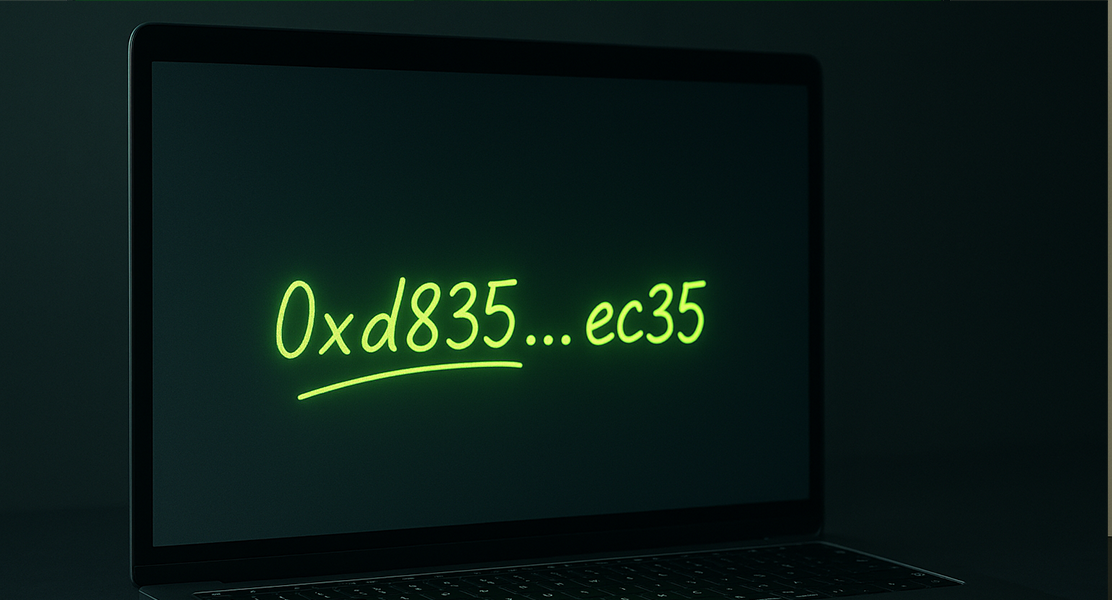
In the fast-evolving world of blockchain and digital assets, the concept of cryptographic signatures stands as one of the foundational building blocks. These signatures do not resemble the hand-drawn “ink on paper” signatures of old — instead, they are mathematical artefacts designed to provide three key assurances in a digital setting:
- Authentication — The signature proves who signed the message (that it originated from a specific private-key holder).
- Integrity — The signature proves that the message has not been altered after signing.
- Non-repudiation — The signer cannot credibly deny having signed the message (under reasonable assumptions).
How It Works
A digital signature scheme operates as follows:
- A party generates a key pair: a private key (kept secret) and a public key (shared).
- When the party wants to sign a message, it uses its private key in a cryptographic algorithm to produce a signature.
- Any verifier can use the corresponding public key, the message, and the signature to check validity.
In blockchain systems, the private key controls ownership and authority; the signature authorizes a transaction or message.
Signature Types in Crypto
There are various advanced signature schemes relevant to cryptocurrencies:
- Ring signatures — allow any member of a group to sign a message on behalf of the group while keeping the exact signer anonymous.
- Group signatures — similar, but include a manager who can reveal signer identity under specific conditions.
- Threshold signatures — require multiple participants to collaborate to produce a valid signature, useful for shared custody and multi-signature wallets.
Why It’s Essential for Crypto
In blockchain ecosystems, cryptographic signatures are indispensable because they:
- Secure transactions and prevent unauthorized spending.
- Authenticate identities through public-key ownership.
- Enable trustless systems without intermediaries.
- Form the foundation for complex protocols like smart contracts and zero-knowledge proofs.
In short, signatures are the invisible infrastructure ensuring every blockchain transaction is genuine and secure.
Sam Altman’s Vision: Crypto Signatures Meet Proof of Personhood
Sam Altman, best known as the CEO of OpenAI, has also emerged as a key figure linking artificial intelligence, identity, and cryptocurrency. His initiative, Worldcoin, was born from a question: As AI becomes more human-like, how will we prove who’s real online?
The Identity Approach
Altman’s solution combines biometrics and blockchain. His company created the Orb, a silver sphere that scans a user’s iris to generate a unique biometric code. This code becomes the foundation for a digital identity credential called World ID, designed to verify “one human, one identity.”
This identity is tied to a cryptocurrency token, creating a financial layer for verified humans. In essence, Worldcoin aims to establish a global “proof of personhood” network where individuals can cryptographically prove they are real humans without revealing their personal information.
The Connection to Crypto Signatures
While not a traditional cryptographic signature scheme, the system relies on similar principles of authenticity and uniqueness:
- The iris scan generates a unique, non-reproducible biometric code — a kind of “human signature.”
- The blockchain infrastructure then uses this code to verify identity and record participation securely.
- Together, they form a new category of digital proof — one linking the physical and digital worlds through cryptography.
Altman’s framework effectively extends the purpose of cryptographic signatures from validating transactions to validating humanity itself.
The Promise and Peril of Biometric Signatures
Potential Benefits
- Human Verification in the Age of AI — As deepfakes and AI-generated personas proliferate, verified human identity could become critical to maintaining authenticity online.
- Financial Inclusion — Providing a digital identity linked to a blockchain wallet can give millions of unbanked individuals access to financial systems.
- Next-Generation Authentication — Combining biometrics with cryptographic proof could lay the groundwork for more secure, tamper-proof digital ecosystems.
Concerns and Risks
- Privacy — Storing or linking biometric data raises fears about surveillance and data misuse.
- Centralization — If the infrastructure for verification is controlled by a small group, it undermines the decentralization ethos of crypto.
- Ethics and Consent — Offering tokens in exchange for biometric data creates ethical tension, particularly in developing nations.
- Regulation — Governments worldwide are still determining how to handle crypto-biometric identity systems, especially around data sovereignty and financial compliance.
The Future: From Transactions to Trust
Sam Altman’s project represents a major evolution in how we think about digital signatures. Traditional cryptographic signatures authenticate messages; biometric-linked systems authenticate people.
This convergence could redefine online trust models in several ways:
- Proof-of-Personhood may complement existing blockchain consensus systems like proof-of-work and proof-of-stake.
- Biometric Anchoring could tie human identity to digital credentials for voting, governance, and financial access.
- Privacy-Preserving Signatures might merge cryptography with zero-knowledge proofs to ensure verification without revealing data.
Conclusion
Cryptographic signatures remain the backbone of blockchain security, ensuring trust and authenticity in a decentralized world. Sam Altman’s foray into biometric identity adds a new dimension to this foundation — one that blends human verification with digital proof.
While the vision of a universal proof-of-personhood network is ambitious, it also raises vital questions about privacy, power, and control. The challenge ahead lies in balancing innovation with ethics — ensuring that as cryptographic signatures evolve from securing transactions to verifying humanity, they do so in a way that preserves freedom, trust, and privacy in the digital age.